Research axis
Research to personalize treatments.
Together, let’s overcome cancer.
Research guided by scientific governance
The scientific governance of the CGFL is broken down into:
- a scientific council that meets every two years. It provides broad guidelines and provides an outside perspective on the Center’s activities. It updates areas for improvement, development, or critiques certain directions taken.
- an executive committee that meets almost every month. It sets out the main guidelines of the scientific council.
The quality of research
at the CGFL is proven
Following an evaluation of the research activity conducted by HCERES in 2016, the CGFL received praiseworthy results, highlighting 95% of strengths. Among the strengths of the center’s research activity, the high percentage of patient inclusion in clinical trials (over 20%), the investment policy (in equipment and personnel) and the dynamic management were, among others, highlighted.
The 3 research axes
Medical oncology, precision medicine and immuno-oncology
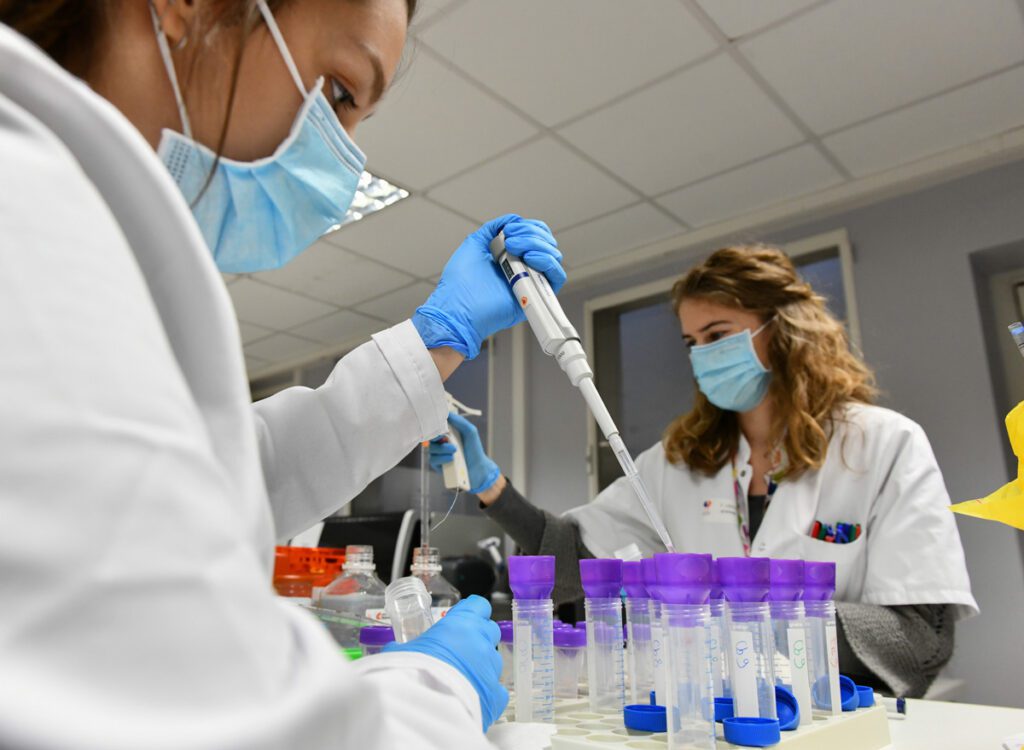
This axis aims to develop clinical applications of molecular biology and cancer immunotherapy for better individualization of oncological therapies. Medical oncology clinicians, researchers and lecturer-researchers from INSERM Unit UMR 1231, anatomical pathologists, biologists and oncogeneticists are working on these subjects using a cancer biology transfer platform. This axis gives rise, on the clinical side, to therapeutic trials; on the research side, to work in molecular biology and immunotherapy.
Molecular imaging and theranostics
The second area of research, which involves molecular imaging, uses technologies such as MRI and PET scans to assess the response to new therapies as quickly as possible. This research will use molecular tracers that infiltrate the tumor and allow us to see, early on, whether or not the tumor is responding to the therapies.
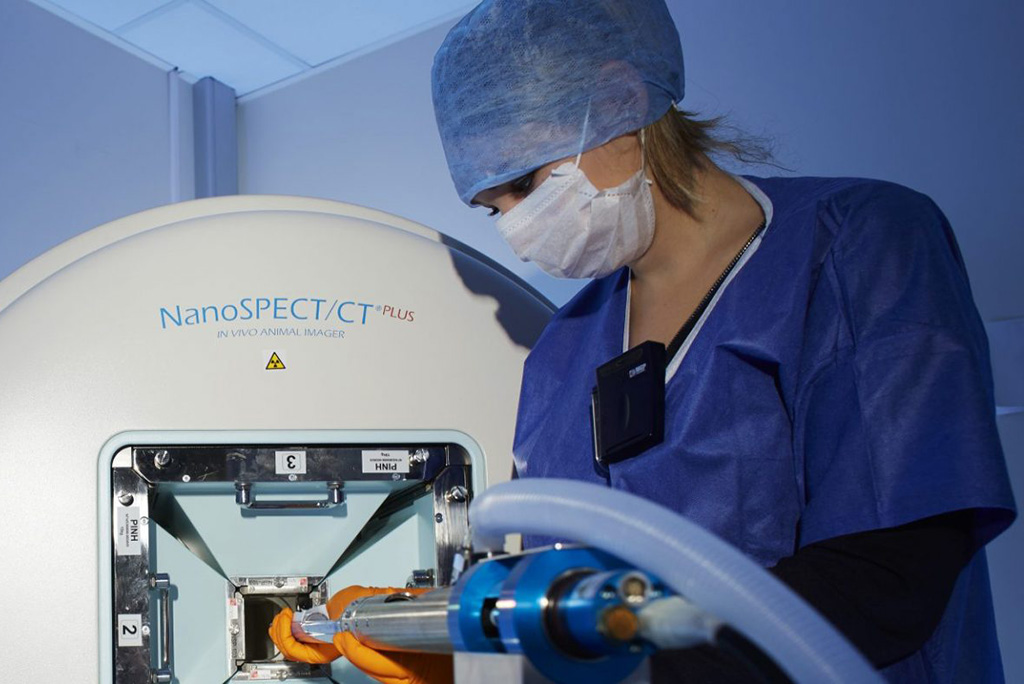
This aspect of research therefore works on different types of tumors both in patients, in the context of clinical trials, but also upstream in animals, on a dedicated preclinical imaging platform. This very upstream work will make it possible to evaluate the effectiveness of molecules very early on. The ultimate goal is to change patient care.
Image-guided treatments include precision radiotherapy, interventional radiology and image-guided surgery. This is a major area of development for the CGFL and the CHU.
Radiotherapy, radiophysics and radiobiology
This research aims to develop technological or computer tools that allow the radiation dose to be increased to the maximum to the tumor while sparing more healthy tissue. A search for balance that is studied through two themes:
Vous souhaitez financer un projet de recherche au CGFL ?