
Would you like a diagnosis confirmation
or a second opinion?

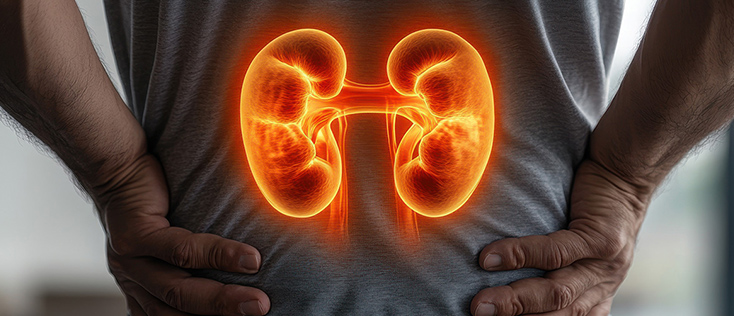
Description
The number of new cases of kidney cancer in metropolitan France in 2018 is estimated at 15,323, 67% of which were in men. Kidney cancer can originate from a cell in different parts of the kidney, but in the majority of cases, it develops from a cell in the renal parenchyma. This type of kidney cancer is called renal cell carcinoma.
When cancer first appears, the cancer cells are initially few in number and confined within the kidney. This is called localized cancer.
If no treatment is implemented, the cancer cells become more numerous; the tumor increases in size. It can spread beyond the kidney and affect neighboring tissues and organs: the renal vein, the tissues surrounding the kidney. From then on, the cancer is said to be locally advanced.
An estimated 13,074 new cases of bladder cancer were diagnosed in France in 2018, 81% of which were in men.
When bladder cancer first appears, the cancer cells are initially few in number and limited to the mucosa. Most often, bladder cancers remain confined there. This is called a non-muscle-invasive bladder tumor.
The tumor can infiltrate deeper into the bladder wall and reach the muscle layer or neighboring organs; this is called invasive cancer and, more specifically, muscle-invasive bladder tumor.
Sometimes cancer cells break away from the tumor in the bladder and migrate to other organs, forming new tumors.
Treatments
Kidney cancer is most often treated with surgery when it is localized or locally advanced. When the cancer has metastasized, treatment relies on targeted therapy drugs and immunotherapy, with or without surgery.
Conventional chemotherapy is not used and radiotherapy is rarely used, because kidney cancer cells are generally resistant to these treatments commonly used against cancer.
SURGERY
The operation involves removing part or all of the kidney affected by the tumor; this is called a nephrectomy.
TARGETED THERAPIES AND IMMUNOTHERAPY
Anticancer drugs are primarily used to treat kidney cancers that have metastasized. The two main types of drugs used are targeted therapies and immunotherapy.
Targeted therapies aim to block specific mechanisms in the development of cancer cells. Immunotherapy involves stimulating and strengthening the body’s natural defenses against cancer cells.
Several types of treatments can be used to treat bladder cancer: surgery, chemotherapy or immunotherapy drugs, or radiation therapy.
Non-invasive bladder cancer:
Surgical intervention performed for diagnosis, transurethral resection of the bladder. This is the first treatment.
For certain tumors at high risk of recurrence or progression, bladder removal may be considered after transurethral resection or after treatment failure
Non-metastatic invasive bladder cancer:
SURGERY
The standard treatment is surgery: the bladder must be removed, along with the lymph nodes located near the bladder.
In men, the prostate and seminal vesicles are also removed, as well as the urethra, if affected. In women, the uterus and urethra are usually removed, along with part of the vagina.
CHEMOTHERAPY AND/OR RADIOTHERAPY
Chemotherapy is sometimes used to shrink the tumor before surgery.
If chemotherapy was not performed before surgery, it may be prescribed, in some cases, after surgery.
In some cases, the bladder cannot be removed or is only partially removed. Chemotherapy treatment may be offered, possibly combined with radiotherapy at the same time.
Metastatic bladder cancer
If the cancer has metastasized to a distance from the bladder, chemotherapy is the main treatment. There is no surgery.